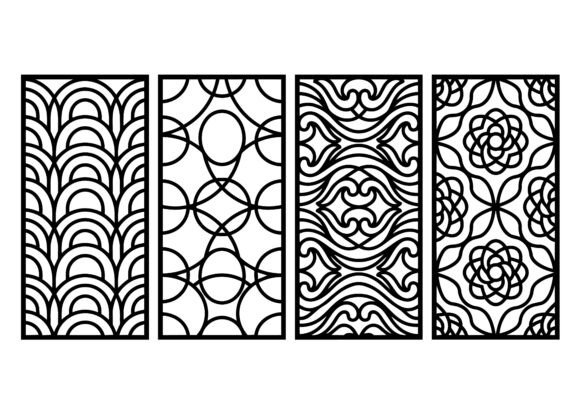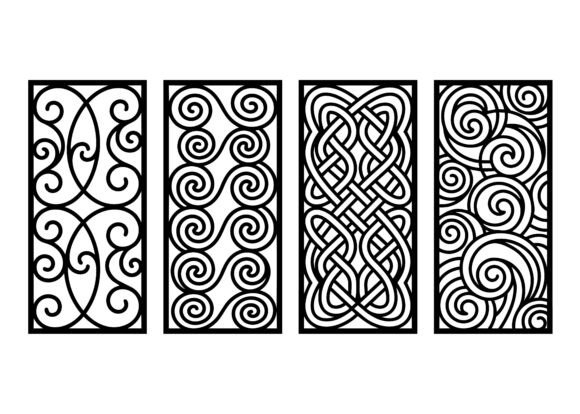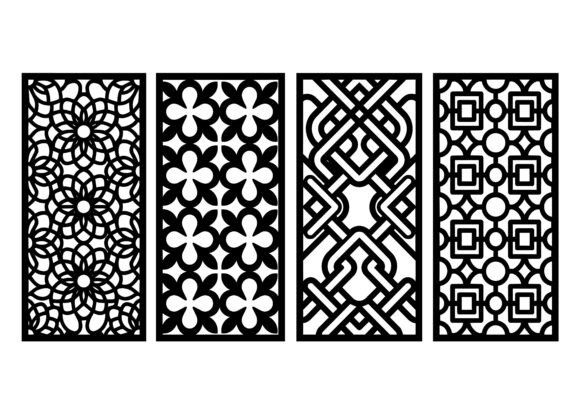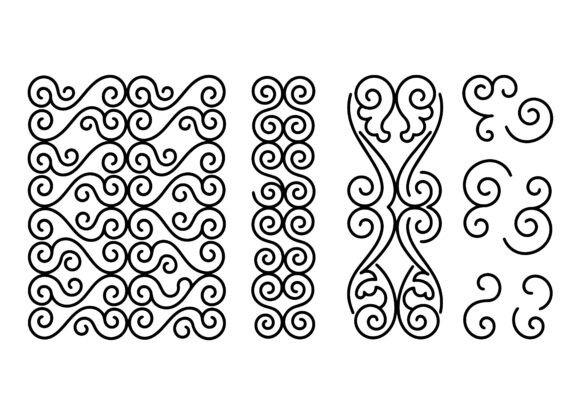
Geometric Tribal Pattern Panel EPS: A Scalable Vector Resource for Precision Design Applications
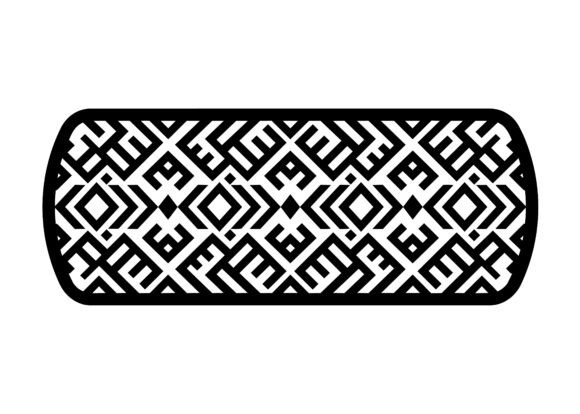
A Geometric Tribal Pattern Panel EPS is a professionally crafted vector asset built around bold, symmetrical shapes—especially diamond motifs—arranged in a seamless horizontal layout. Unlike raster-based patterns or loosely drawn illustrations, this file type delivers mathematical precision, infinite scalability, and clean vector paths optimized for technical production workflows. It’s not just decorative; it’s engineered for function—whether that means guiding a laser cutter through 3mm birch plywood, instructing a CNC router on acrylic signage, or serving as the repeat unit for a textile print run.
What Sets This Pattern Apart from Generic Tribal Graphics
The distinction lies in intentionality and execution. Many tribal-inspired vectors rely on stylized linework or organic flourishes that sacrifice reproducibility at scale. In contrast, the Geometric Tribal Pattern Panel EPS prioritizes symmetry, alignment, and modularity. Each diamond motif interlocks with adjacent elements without gaps or overlaps—critical for seamless tiling across large surfaces. The composition balances ethnic abstraction (think angular interpretations of West African adinkra geometry or Andean textile logic) with contemporary minimalism. There are no gradients, textures, or embedded raster elements—just crisp Bézier curves, consistent stroke weights, and logically grouped layers where applicable.
This design discipline translates directly to reliability in output. When imported into Adobe Illustrator, CorelDRAW, or CAD software like Fusion 360 or LightBurn, the file retains full editability: individual shapes can be recolored, isolated, or repositioned without distortion. That level of control matters when adapting the pattern for different substrates—say, adjusting line thickness for fine-detail engraving on brass versus broader cuts for reclaimed wood signage.
Practical Performance Across Materials and Machines
Real-world testing shows consistent results across common fabrication platforms. On a 60W CO₂ laser cutting system, the pattern produces sharp, burr-free edges in 1/8" acrylic at 12 mm/s feed speed with 75% power—no post-processing needed. For CNC engraving in aluminum, simplified versions (with reduced node count and uniform path direction) minimize tool chatter and extend bit life. With fabric printing, the seamless horizontal panel layout allows straightforward repeat setup in RIP software, eliminating visible seam lines even at 120 cm widths.
One small business owner producing custom wall panels reported using the same Geometric Tribal Pattern Panel EPS file across three distinct product lines: laser-cut oak coasters (scaled down to 8 cm width), vinyl-decal borders for retail displays (output as CMYK-ready PDF/X-4), and woven jacquard samples (converted to .jpc via textile-specific vector prep). No redesign was required—only format conversion and minor scaling adjustments.
Who Benefits Most—and Where It Fits Best
Professionals working at the intersection of design and physical production gain the clearest ROI. Industrial designers prototyping consumer electronics casings use the pattern for embossed bezel accents. Packaging developers apply it as a structural die-line guide for rigid boxes with textured side panels. Interior architects specify it for custom laser-cut room dividers or acoustic wall baffles—leveraging the diamond geometry’s inherent rigidity and shadow-play potential.
Freelance surface pattern designers find value in its adaptability: the horizontal panel format simplifies integration into larger repeat systems, while the ethnic-inspired abstraction avoids cultural appropriation pitfalls common with literal iconography. Educators teaching vector fundamentals appreciate its clean topology—it serves well for classroom exercises on pathfinder operations, global swatch application, or alignment precision.
Small batch producers—especially those balancing digital tools with hands-on craftsmanship—benefit from the file’s readiness. There’s no need to trace, redraw, or “fix” resolution issues. What arrives is production-ready: CMYK and RGB color variants included where relevant, PANTONE references mapped to base shapes, and documentation noting optimal minimum cut widths (0.4 mm for metal, 0.25 mm for fabric plotters).
Limitations Worth Acknowledging
While versatile, the Geometric Tribal Pattern Panel EPS isn’t universal. Its strength in symmetry means it doesn’t suit projects requiring asymmetrical flow or directional movement—like wayfinding graphics or narrative textile stories. It also assumes users have baseline vector literacy; beginners may need to learn how to manage compound paths or adjust raster effects (though none are baked in, so learning curves remain shallow).
Additionally, while fully scalable, extreme enlargement—beyond 500% of original dimensions—can expose subtle rounding artifacts in older EPS versions if opened in legacy software. Modern implementations (EPS 10+) mitigate this, but verification in your target environment remains prudent. For ultra-high-DPI applications like micro-engraving on medical devices, additional node optimization may be advisable—but that’s a refinement step, not a flaw.
Workflow Integration and Long-Term Utility
The file integrates cleanly into standard creative pipelines. It imports without error into Affinity Designer, Inkscape (with minor layer name adjustments), and Adobe Creative Cloud apps. Batch processing is straightforward: using scripts or actions, designers have automated color swaps across dozens of variants for client presentations or A/B testing on packaging mockups.
From a licensing standpoint, commercial-use rights are clearly defined—no attribution required, no per-unit fees, and no restrictions on derivative works (provided final outputs don’t resell the EPS as-is). That flexibility supports iterative development: a furniture maker might extract a single diamond unit to create a custom inlay template, then later combine four units into a new border configuration for a limited-edition collection—all under one license.
Over time, the value compounds. Unlike trend-dependent assets, geometric tribal patterns rooted in mathematical harmony age well. They’ve appeared in architectural ornamentation for centuries—not because they’re “in style,” but because symmetry and rhythm resonate across cultures and eras. This Geometric Tribal Pattern Panel EPS inherits that durability, making it a sensible long-term addition to a studio’s core resource library rather than a disposable download.
Final Considerations Before Use
If your work involves precision fabrication, repeat-based surface design, or cross-material adaptation, the Geometric Tribal Pattern Panel EPS earns its place as a foundational tool—not a novelty. It performs best when treated as infrastructure: something you build upon, not just apply. Test it early in your workflow—import it into your primary vector editor, scale it to your largest intended output size, and verify path integrity before committing to material costs.
For educators, it’s a reliable case study in vector efficiency. For makers, it’s a time-saver that reduces trial-and-error in machine setup. And for designers building brand systems with tactile depth, it offers a bridge between digital concept and physical presence—without sacrificing fidelity at any stage.