Watercolor Magical Garden Pink Fairies: A Strategic Creative Asset for Purpose-Driven Design
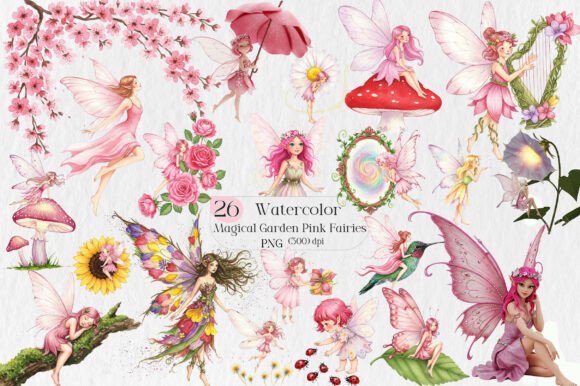
Watercolor Magical Garden Pink Fairies isn’t just another decorative clipart set—it’s a high-resolution, commercially licensed visual toolkit designed for creators who prioritize intentionality over ornamentation. With 26 PNG files, transparent backgrounds, and full commercial rights, it bridges aesthetic appeal with functional flexibility. But its real value emerges not from how many pixels it contains, but how deliberately you deploy it within your broader creative or business strategy.
Why This Set Fits Real Work—Not Just Decoration
Most digital assets fade into the background of workflows because they’re acquired without alignment to goals. Watercolor Magical Garden Pink Fairies avoids that trap by offering consistency in tone (soft, whimsical, nature-infused), technical readiness (high-res, transparent, instantly usable), and legal clarity (no hidden restrictions on print-on-demand, physical goods, or digitally modified derivatives). That means less time negotiating licensing terms—and more time building what matters: cohesive brand experiences, thoughtful learning materials, or scalable product lines.
For educators developing themed lesson plans around botany, folklore, or emotional literacy, these fairies lend gentle visual scaffolding—supporting engagement without overwhelming cognitive load. For small-batch makers launching a line of eco-conscious children’s apparel, they offer a ready-made motif that signals playfulness and care, reducing design overhead while preserving authenticity. And for digital planners or habit trackers, the watercolor texture adds tactile warmth to screen-based routines—making consistency feel more personal, less transactional.
Strategic Use Starts With Clarity of Purpose
Before opening the ZIP file, ask: What outcome am I trying to support? Not “What can I put this on?” but “What experience do I want someone to have—and how does this asset help shape it?”
- Branding: If your brand voice is gentle, imaginative, and grounded in natural metaphors (e.g., wellness coaching, herbal apothecaries, mindful parenting resources), Watercolor Magical Garden Pink Fairies reinforces tone—not as decoration, but as tonal punctuation. Used consistently across social posts, email headers, and packaging, it becomes part of your visual grammar.
- Product Development: When designing mugs, greeting cards, or fabric prints, treat each fairy not as a standalone image—but as a modular element. Rotate, layer, crop, or pair with hand-lettered quotes or botanical line art. The transparency allows seamless integration; the watercolor texture prevents flatness. That’s how you avoid generic “clipart clutter” and build ownable design language.
- Learning & Communication: In educational printables or workshop handouts, these fairies function as visual anchors—not distractions. A pink fairy hovering near a labeled flower diagram supports memory retention; one nestled beside a reflection prompt invites openness. Their soft edges reduce visual aggression, making them especially effective for neurodiverse audiences or low-stakes learning environments.
When Context Matters More Than Creativity
Watercolor Magical Garden Pink Fairies excels where subtlety, warmth, and approachability are strategic advantages—not where boldness, contrast, or industrial precision are required. It won’t serve well in high-contrast safety signage, tech SaaS dashboards, or luxury fashion campaigns built on minimalism and monochrome. That’s not a limitation—it’s a signal. Knowing when not to use it is as important as knowing when to reach for it.
Consider audience expectations. A financial advisor targeting retirees likely gains little from fairy motifs—even beautifully rendered ones. But a children’s yoga instructor creating printable pose cards? That same motif builds trust through visual congruence with values like gentleness, growth, and imagination. Match the asset to the emotional contract you’re asking your audience to keep.
Avoiding the “Just Because It’s Pretty” Trap
Risk arises not from using Watercolor Magical Garden Pink Fairies—but from using it without editing, contextualizing, or integrating it meaningfully. Dropping a fairy onto a generic birthday card template doesn’t create value. But reworking that fairy into a custom border for a client’s bespoke invitation suite—layering it with their color palette, pairing it with original calligraphy, and printing it on textured cotton paper—that creates differentiation. That’s where commercial license becomes leverage.
Also watch for overuse. Repetition without variation dulls impact. One fairy per page in a 20-page planner works as rhythm. Ten fairies competing for attention on a single social graphic fractures focus. Let whitespace, typography, and hierarchy carry equal weight. The watercolor quality invites breathing room—not busyness.
Practical Integration Tips
- Start small: Test one fairy in a low-risk context first—like a thank-you card for a workshop attendee or a section divider in a free downloadable resource. Observe response, then scale intentionally.
- Modify before deploying: Even minor edits—adjusting saturation, adding a subtle drop shadow, or masking part of the image behind text—signal authorship and prevent generic appearance. Your modifications transform licensed assets into authentic extensions of your voice.
- Document usage: Keep a simple log: where used, why chosen, what outcome followed (e.g., “Used fairy + lavender illustration on ‘Calm Morning’ planner page → 23% increase in upsell to premium version”). Over time, this reveals which applications drive real traction—not just aesthetics.
- Pair with purpose-built copy: A pink fairy beside the phrase “Grow at your own pace” lands differently than beside “50% off today only.” Align visual tone with message intent. Soft visuals need soft verbs, open-ended invitations, and human-centered framing.
Long-Term Value Lies in Consistency, Not Quantity
You don’t need all 26 files at once. You need the right one—applied with clarity—at the right moment. Think of Watercolor Magical Garden Pink Fairies as a curated palette, not a warehouse. Its longevity comes from how reliably it supports your goals across months or years—not how many products you cram it onto.
For freelancers building recurring client relationships, consistent use across deliverables (e.g., same fairy style in onboarding kits, progress reports, and celebration cards) builds recognition and continuity—without requiring custom illustration each time. For educators updating curriculum annually, it provides visual stability amid pedagogical change. And for small businesses iterating on product lines, it offers a recognizable thread across seasons—pink fairies in spring garden journals, summer picnic towels, autumn gratitude cards.
This kind of coherence doesn’t happen by accident. It happens when you treat digital assets like strategic partners—not disposable props. Watercolor Magical Garden Pink Fairies earns its place in your toolkit not because it’s versatile in theory, but because it proves versatile in practice—when paired with clear goals, thoughtful execution, and respect for audience context.
Final Thought: Licensing Is Permission—Not Direction
The commercial license grants freedom. But freedom without direction leads to noise. The instant download gives speed—but speed without strategy leads to wasted effort. So before you open that folder, pause. Name the outcome you’re after. Sketch the feeling you want to evoke. Then choose—not just a fairy—but the right fairy, for the right reason, in the right place. That’s how Watercolor Magical Garden Pink Fairies moves from decorative detail to deliberate advantage.