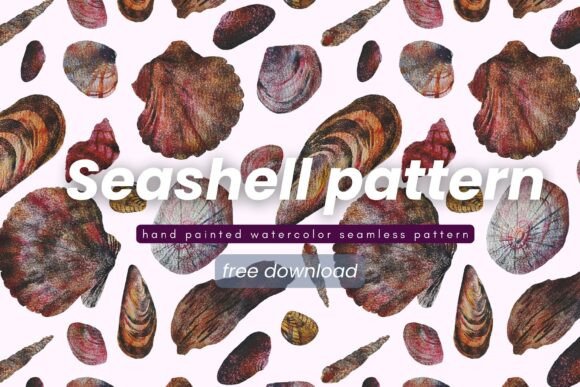
Seashell Pattern: A Strategic Design Asset for Purpose-Driven Creators
A Seashell Pattern isn’t just decorative—it’s a deliberate visual decision with functional weight. This seamless coastal design features detailed seashell illustrations rendered with rich textures and natural tones: soft sand-beige, weathered coral, seafoam green, and muted shell-pink. Its craftsmanship matters—not as ornament, but as infrastructure. When you choose this Seashell Pattern, you’re selecting consistency, cohesion, and contextual resonance—not just aesthetics.
Why Seamless Matters More Than You Think
Seamlessness isn’t a technical footnote—it’s operational leverage. A truly seamless Seashell Pattern eliminates visible repeats, tiling artifacts, or alignment gaps across surfaces of any scale. That means no rework when scaling from a business card to a trade show backdrop. No pixelation when zooming into an Instagram Story background. No color shifts between digital screens and Pantone-matched packaging.
For small business owners launching eco-conscious skincare lines, that seamlessness translates directly to brand trust. Customers notice—consciously or not—when a label looks digitally stretched or a website background feels “glued together.” The Seashell Pattern avoids that friction. It behaves predictably, so your attention stays on messaging, not mitigation.
Where Strategic Alignment Begins: Use Cases with Real Impact
The value of the Seashell Pattern emerges most clearly in contexts where visual continuity supports deeper goals:
- Branding and packaging: For brands rooted in calm, sustainability, or coastal heritage (think artisanal teas, ocean-safe sunscreen, or handmade ceramics), this Seashell Pattern reinforces positioning without words. It signals care in materiality—and invites customers to associate your product with rest, rhythm, and natural integrity.
- Social media backgrounds: A consistent Seashell Pattern across LinkedIn banners, Pinterest pins, and Instagram highlights builds recognition faster than logos alone. Because it’s high-resolution and fully scalable, it adapts cleanly to each platform’s dimensions—no cropping compromises, no distorted shells.
- Stationery design: Letterheads, invoices, and thank-you cards gain quiet authority when anchored by a thoughtful Seashell Pattern. It subtly communicates attention to detail—a trait clients and collaborators subconsciously equate with reliability.
- Fabric and surface design: From tote bags to notebook covers to ceramic decals, this Seashell Pattern holds up under physical use. Its natural tonal range ensures dye-lot consistency across textile batches, and its texture depth translates well to embossing, foil stamping, or screen printing.
Intentional Use Starts With Clarity—Not Inspiration
Using the Seashell Pattern effectively begins before opening your design software. Ask yourself: What outcome am I trying to support? Not “What looks nice?” but “What do I want someone to feel, remember, or do after encountering this?”
If your goal is customer retention for a wellness subscription box, the Seashell Pattern works best when paired with restrained typography and ample white space—reinforcing serenity and intentionality. If you’re building brand awareness for a new coastal café, consider using the Seashell Pattern only on napkins and coasters—not menus—so it becomes a tactile, repeatable cue rather than visual noise.
That distinction—between signal and saturation—is where many creators misstep. A Seashell Pattern used everywhere dilutes its meaning. Used thoughtfully in one or two high-touch touchpoints, it deepens memory and emotional resonance.
Planning Tips That Prevent Costly Revisions
Before committing the Seashell Pattern to final files, test these three checkpoints:
- Contrast check: Overlay your key text (e.g., logo, headline, price) at actual size and resolution. Does legibility hold at 75% opacity? At 100%? Adjust brightness or add subtle drop shadows only if needed—don’t override the pattern’s natural subtlety.
- Context check: Print a 4” x 4” swatch and place it beside your physical product samples or office materials. Does the tone harmonize—or compete—with existing wood grain, paper stock, or metal finishes?
- Scale check: Zoom out. View the full layout on a tablet, then on desktop, then on mobile. Does the Seashell Pattern retain its organic rhythm at every size—or does it blur into noise or flatten into monotony? Seamless doesn’t mean invisible; it means legible at every distance.
Risks of Using the Seashell Pattern Without Strategy
Without clear intent, even a beautifully crafted Seashell Pattern can backfire. Here’s what to watch for:
- Misaligned positioning: A luxury financial advisory firm using the Seashell Pattern may unintentionally signal informality or lack of gravitas—unless deliberately juxtaposed with strong typography, precise grids, and authoritative color accents.
- Overextension: Applying the Seashell Pattern across email headers, slide decks, invoice templates, and social posts—without variation or hierarchy—can flatten brand voice and exhaust visual bandwidth. Consistency ≠ repetition.
- Context blindness: Using it on low-resolution digital ads or compressed web assets risks muddying the delicate shell textures. The Seashell Pattern thrives in fidelity—not compromise. If your delivery channel can’t support high-res rendering, choose a simplified derivative—or skip it entirely.
Long-Term Value: Beyond the First Project
The Seashell Pattern pays dividends over time—not because it’s trendy, but because it’s adaptable and durable. Unlike seasonal motifs, its natural tonal palette resists obsolescence. Its coastal reference is evocative but not literal: it suggests openness, resilience, and gentle movement—not vacation clichés.
That longevity supports smarter resource allocation. One well-chosen Seashell Pattern can serve multiple product lines, campaigns, or rebrands—provided usage remains intentional. A stationery designer might license it once and deploy it across client projects spanning five years, adjusting only secondary colors or typographic pairings to match evolving briefs.
It also supports internal alignment. When team members—from marketing to operations to customer service—see the same Seashell Pattern on internal decks, training materials, and external packaging, they absorb shared values more deeply. Visual consistency becomes cultural shorthand.
How to Approach the Seashell Pattern Like a Practitioner
Treat it like a tool—not a decoration. Start by auditing your current visual assets. Where do you already signal calm, authenticity, or natural quality? Where do you risk visual fatigue or inconsistency? Then map the Seashell Pattern to the highest-leverage gaps—not the easiest ones.
For educators creating ocean-themed curriculum kits: use the Seashell Pattern on chapter dividers and reflection journal covers—not worksheets—to preserve readability while reinforcing theme.
For freelancers building personal brands: apply it only to proposal PDF covers and portfolio case study headers—never to every slide—to make those moments feel distinct and considered.
For publishers launching a mindfulness imprint: let the Seashell Pattern appear on spine bands and endpapers—not full jacket wraps—to create quiet discovery rather than visual dominance.
In each case, the Seashell Pattern serves a specific function: guiding attention, reinforcing values, or softening transitions. Its power lies in restraint—not coverage.
Final Thought: Design Is Decision-Making in Disguise
Every time you select the Seashell Pattern, you’re making a choice about how people experience your work—not just how it looks. That choice gains strength when grounded in purpose, tested in context, and aligned with real outcomes. It’s not about filling space. It’s about holding space—for clarity, for calm, for connection.
Use it where it earns its place. Adapt it where your audience needs nuance. Set it aside where simplicity serves better. That discipline—not the pattern itself—is what delivers lasting value.