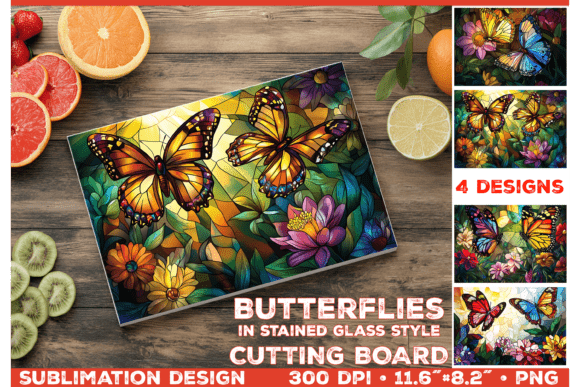
Kitchen Cutting Board Sublimation Design
A Kitchen Cutting Board Sublimation Design is more than a decorative image—it’s a functional asset engineered for precision transfer onto heat-activated substrates like bamboo, maple, or coated glass cutting boards. Unlike standard print-on-demand graphics, sublimation designs must meet specific technical criteria: high-resolution (300 DPI minimum), CMYK color mode, bleed-aware layout, and vector-compatible raster elements where needed. This ensures crisp detail, vibrant color fidelity, and edge-to-edge coverage after heat press application. When executed well, the result isn’t just visual appeal—it’s durability, food-safe compliance (when applied to certified surfaces), and seamless integration into broader product development workflows.
Where It Fits in Your Creative or Production Workflow
For designers, small-batch producers, and home-based craft businesses, Kitchen Cutting Board Sublimation Design sits at a critical junction between concept and physical output. It’s rarely the first or last step—but it’s often the make-or-break pivot point. Before finalizing a design, you’ll typically have already selected your board material, confirmed press temperature and dwell time parameters, and validated substrate coating compatibility. That means the design phase isn’t isolated; it’s informed by equipment specs, supplier guidelines, and real-world production constraints.
During execution, the design file becomes an active participant in quality control. For example, if your stained glass style butterflies require sharp black outlines to mimic leaded glass framing, those lines must be at least 1.5 pt thick and fully closed—otherwise, they’ll blur or vanish under heat. Similarly, the blooming floral arrangement needs intentional negative space around petal edges to prevent ink migration during sublimation. These aren’t aesthetic preferences—they’re process requirements that directly impact yield rates and rework volume.
Stained Glass Style Butterflies and Blooming Floral Arrangement: A Case Study in Purposeful Design
The Kitchen Cutting Board Sublimation Design with Stained Glass Style Butterflies and Blooming Floral Arrangement exemplifies how artistic intent and technical execution converge. Its bold outlines, segmented jewel-tone fields, and radiant light effects aren’t just stylistic choices—they serve functional roles:
- Outlines act as registration guides—helping align layers during multi-pass presses or when pairing with engraved or laser-cut board edges.
- Luminous color segments reduce banding risk by avoiding large gradients that can break up under uneven heat distribution.
- Sunlight effects are built using layered semi-transparent overlays, not single-layer filters—ensuring consistent translucency across varied board finishes (e.g., matte vs. glossy coatings).
- Floral layering follows a z-depth hierarchy: foreground petals sit on top of mid-ground leaves, which rest above background stems—mimicking natural growth patterns while maintaining legibility at smaller board sizes (e.g., 9" x 12").
This level of intentionality transforms the design from decoration into a production-ready asset. It also enables downstream flexibility: the same file can scale cleanly to a 12" x 18" serving board or adapt to a circular charcuterie board layout with minimal repositioning—because spacing, proportion, and focal balance were baked in from the start.
Integration Across Tools and Teams
In practice, this design doesn’t live in isolation. It flows through multiple touchpoints:
- Design software: Created in Adobe Illustrator or Affinity Designer for vector scalability, then exported with embedded ICC profiles to preserve color accuracy across monitors, proof printers, and press RIPs.
- Production hardware: Tested on your exact press model—not just “a” heat press—to verify how the stained glass effect holds up at 400°F for 60 seconds on 1/2" maple. Small variances in platen pressure or dwell time shift perceived luminosity significantly.
- E-commerce platforms: Optimized preview thumbnails show the design’s glow effect without overexposing highlights—critical for conversion. Mockups use real board photos (not generic templates) so customers see true scale, grain interaction, and color rendering.
- Customer-facing assets: Packaging inserts or care cards reference the stained glass inspiration—not as marketing fluff, but to guide usage (e.g., “Wipe gently to preserve luminous finish” or “Avoid abrasive scrubbers near outlined borders”).
That last point matters: when buyers understand *why* the butterflies look like they do—and how care preserves that effect—they’re more likely to retain the item long-term, reducing returns and increasing lifetime value.
Practical Implementation Tips for Consistent Results
You don’t need a studio setup to deploy this effectively. Here’s what actually moves the needle:
- Test on your substrate first. Order a single blank board from your supplier, run one test press with a 10% opacity version of the design, and inspect for outline integrity and color bleed. Adjust halftone settings in your RIP software before scaling to batch.
- Organize files by workflow stage: Keep “final press-ready” versions separate from “client presentation” or “social media mockup” variants. Name them clearly—e.g., CB-StainedGlass_Butterflies_12x18_PressReady_v3.ai.
- Build reusable templates. Once you’ve dialed in margins, safe zones, and bleed for one board size, save it as a template layer. Reuse it across new designs to maintain consistency and cut setup time by 40–60%.
- Document press parameters per design type. Jewel-tone-heavy layouts may need slightly longer dwell times than pastel-dominant ones due to pigment density. Keep a simple spreadsheet: board type | temp | time | pressure | observed outcome.
- Batch similar orders. Group all stained glass-style designs together in one press run—even across different clients—if they share substrate, size, and coating. Reduces machine warm-up cycles and ink waste.
Long-Term Usability and Brand Alignment
A well-executed Kitchen Cutting Board Sublimation Design pays dividends beyond the first sale. Because the stained glass butterflies and blooming florals rely on strong compositional anchors—not fleeting trends—the design remains relevant across seasons and interior styles. It works equally well in farmhouse kitchens (paired with galvanized metal accents), cottagecore spaces (next to linen napkins and dried lavender), or modern minimalist setups (as a single vibrant focal point against white quartz).
More importantly, it supports brand cohesion. If you offer coordinating items—like matching oven mitts or ceramic mugs—the same color palette, outline weight, and light-effect logic can carry across formats. That consistency builds recognition without requiring identical imagery. Customers begin to associate your work with a certain *quality of light*, a particular *precision of line*, or a distinct *balance of vibrancy and calm*—all rooted in how the original cutting board design was built and deployed.
Ultimately, this isn’t about making something pretty. It’s about building a repeatable, scalable, technically sound process where aesthetics serve function, and function reinforces perception. When your next customer unwraps a board and notices how the sunlight effect catches the room’s natural light—or how the butterfly wings seem to lift off the surface—that moment is the direct result of deliberate planning, cross-tool coordination, and respect for the full workflow—not just the final image.