Coffee Gnome in Mug Embroidery Design: A Thoughtful Intersection of Craft, Culture, and Creative Commerce
In today’s fast-evolving creative economy, digital design assets are no longer just decorative—they’re strategic tools. Among the rising wave of purpose-built, high-fidelity digital files gaining traction with makers and micro-businesses, the Coffee Gnome in Mug Embroidery Design stands out—not as a novelty, but as a quiet reflection of deeper shifts in how professionals approach personalization, brand authenticity, and tactile storytelling.
More Than a Graphic: What This Design Represents
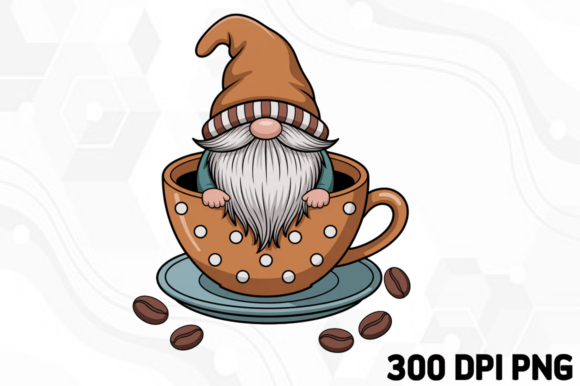
The Coffee Gnome in Mug Embroidery Design is a meticulously crafted digital embroidery motif centered on a whimsical, hand-drawn gnome cradling a steaming mug—rendered with subtle stitch texture, balanced negative space, and intentional imperfections that evoke artisanal warmth. It’s delivered as a single PNG file at 300 dpi (4500 × 4500 px), featuring a transparent background and optimized vector-like clarity—ideal for precise cutting on Cricut, Silhouette, or Brother ScanNCut machines.
Importantly, it’s not a generic clipart file. Its composition reflects embroidery-specific conventions: clean interior paths, minimal overlapping nodes, and scalable line weight—all critical for reliable weeding and consistent stitch replication across fabric, felt, or twill. This isn’t accidental; it signals a growing expectation among crafters and small-batch producers: digital files must behave like physical materials.
Why This Resonates Now: Aligning With Evolving Creative Workflows
Over the past three years, the home-based creative sector has undergone quiet but profound recalibration. According to the 2024 U.S. Craft Industry Alliance Report, over 68% of small-scale makers now blend digital design with hands-on fabrication—using software not just for layout, but for material simulation, batch customization, and rapid prototyping. In this context, the Coffee Gnome in Mug Embroidery Design meets a practical need: bridging the gap between inspiration and execution without requiring technical illustration skills.
Consider a freelance textile designer launching a seasonal collection of coffee-themed kitchen linens. Instead of commissioning custom embroidery artwork—a process that can take days and cost hundreds—she downloads the file, imports it into her embroidery software, adjusts hoop size and thread color palette, and runs a test stitch on linen-cotton blend. The turnaround? Under 20 minutes. That speed—and the assurance of professional-grade resolution—translates directly into faster iteration cycles, lower overhead, and more responsive product development.
A Cultural Mirror: Cozy Aesthetics Meet Intentional Living
This design also taps into what cultural analysts are calling the “cozy realism” movement—a consumer-led pivot away from hyper-curated perfection toward warmth, familiarity, and gentle humor. Think of it as the visual counterpart to slow living: soft edges, tactile metaphors (mugs, knits, forest motifs), and emotionally resonant symbolism (gnomes as quiet guardians of ritual). It’s no coincidence that “It’s The Most Wonderful Time” appears alongside the gnome—not as holiday-specific messaging, but as a grounded affirmation of daily joy: the steam rising from morning coffee, the pause before the day begins, the small things that anchor us.
For entrepreneurs building lifestyle brands—especially in wellness, education, or remote-work adjacent niches—this aesthetic carries functional weight. A tote bag featuring the Coffee Gnome in Mug Embroidery Design doesn’t just hold items; it signals shared values: presence, craft, and mindful routine. That resonance extends beyond aesthetics into customer retention: buyers increasingly favor products that reflect identity-aligned narratives—not just utility.
From File to Finished Product: Real-World Applications That Scale
The versatility embedded in this asset goes beyond surface-level compatibility. Its 300 dpi resolution and transparent background ensure fidelity across multiple output methods:
- T-shirts and apparel: Printed via direct-to-garment (DTG) or heat-transfer vinyl (HTV), where crisp edges prevent haloing and maintain the hand-drawn charm.
- Mugs and tumblers: Cut from permanent vinyl and applied with precision—ideal for ceramic, stainless steel, or matte-finish surfaces where alignment and edge definition matter.
- Embroidery patches and appliqués: Digitized directly into machine-readable formats (PES, DST, EXP) using auto-digitizing plugins—reducing manual pathing time by up to 70% for experienced users.
- Scrapbooking and mixed-media frames: Printed on premium cardstock or vellum, then layered with foil accents or embossed textures to enhance depth without sacrificing clarity.
Note: As stated, the file is delivered as a static PNG and cannot be edited natively (e.g., no layered PSD or editable vector paths). While this may seem limiting, it reflects an intentional trade-off: prioritizing plug-and-play reliability over flexibility. For professionals managing tight deadlines or supporting non-designer team members (e.g., educators preparing classroom crafts or church volunteers organizing fundraiser merchandise), that constraint becomes a benefit—not a drawback.
Technology Meets Tradition: Where Digital Tools Empower Analog Practice
This moment—where a single PNG file supports both laser-cut wood signs and hand-stitched tea towels—is emblematic of a broader convergence. Advances in consumer-grade cutting machines, cloud-based embroidery software (like Embrilliance or Hatch), and AI-assisted scaling tools have lowered barriers to entry—but they’ve also raised expectations for source-file integrity. A poorly rasterized or low-resolution design fails catastrophically at scale: jagged edges, misaligned cuts, or pixelation that undermines perceived quality. The Coffee Gnome in Mug Embroidery Design avoids those pitfalls through disciplined production standards—4500 × 4500 px ensures scalability down to 1.5-inch patches or up to 12-inch wall hangings without interpolation artifacts.
That attention to technical rigor mirrors trends in adjacent industries. Just as photographers now deliver RAW + web-optimized JPEG bundles, and font foundries offer variable fonts alongside static weights, leading digital asset creators are treating each file type as a distinct medium—with its own physics, constraints, and best practices.
Strategic Considerations for Professionals and Teams
For marketers building branded merchandise programs, this design offers more than visual appeal—it delivers consistency. Because it’s resolution-locked and background-transparent, it integrates seamlessly into existing brand systems: same color profile across print, web, and packaging mockups; same proportions whether used on Instagram Stories or embroidered on employee welcome kits.
Freelancers and agencies can embed it into client proposals as a “ready-to-deploy” element—demonstrating speed-to-market while preserving creative control. And for educators teaching design thinking or maker literacy, it serves as a concrete case study in asset lifecycle management: sourcing → testing → adapting → deploying—without needing proprietary software licenses.
Final Thought: Quality as Quiet Infrastructure
The Coffee Gnome in Mug Embroidery Design doesn’t shout. It doesn’t trend-jack or chase virality. Instead, it operates as infrastructure—reliable, well-specified, and quietly enabling better work. In a landscape saturated with disposable digital content, its value lies in what it *doesn’t require*: no troubleshooting, no upselling, no learning curve. Just one high-fidelity PNG file—designed to support intention, not distract from it.
As creative workflows continue tightening and audiences grow more discerning about authenticity, assets like this won’t just remain relevant—they’ll become benchmarks. Not because they’re flashy, but because they honor the craft behind the click.