Black and Proud Black History Embroidery: A Digital Design for Meaningful Expression and Ethical Creation
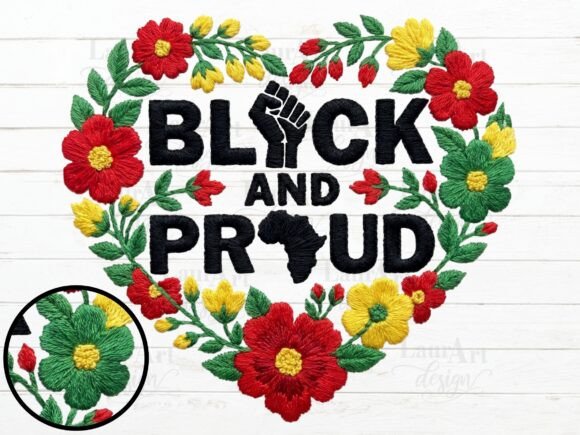
Black and Proud Black History Embroidery is more than a decorative motif—it’s a culturally grounded digital artifact designed to honor legacy, affirm identity, and support intentional creation. Unlike generic clipart or mass-produced graphics, this design carries narrative weight: its composition reflects reverence for Black history through symbolic embroidery aesthetics—stitched textures, layered motifs, and deliberate line work evoking traditional hand-stitched storytelling. Yet it exists exclusively in digital form, optimized not for printing on paper but for translation into physical objects—from apparel and home goods to educational displays and community art installations. Its purpose bridges commemoration and craft, making it especially valuable for educators launching Black History Month units, small-batch makers developing inclusive product lines, and designers seeking authentic, rights-respectful assets.
What Makes This Design Distinctly Functional—and Ethically Anchored?
The phrase “This is a Digital Item” isn’t just a label—it signals a precise technical and ethical framework. The design arrives as a single high-resolution PNG file (300 dpi, 5400 px on the longest side), packaged in a ZIP folder with no extraneous files or licensing ambiguity. Its transparent background enables seamless integration across substrates: sublimation on polyester fabrics, heat-transfer vinyl layering, or direct-to-garment printing. Because it’s raster-based—not vector—it preserves fine textural detail essential to embroidery simulation, but also requires appropriate editing tools: Adobe Photoshop, Affinity Photo, or GIMP—not Illustrator or CorelDRAW—for meaningful color or element adjustments.
This technical specificity matters in practice. A school district ordering custom tote bags for a Juneteenth assembly can import the file directly into their print-on-demand workflow without worrying about jagged edges or scaling distortion. A textile artist using a Cricut Maker with Print & Cut capability can generate precise cut paths around the stitched border, ensuring clean application onto denim jackets or canvas panels. Meanwhile, the watermark reminder—required when applied to physical products—reinforces responsible attribution, protecting both the creator’s labor and the cultural integrity embedded in the design. It’s a quiet but vital guardrail against commodification without context.
Real-World Applications Across Diverse Contexts
Use cases span professional, educational, and personal domains—not as isolated examples, but as overlapping ecosystems where intention meets execution.
- Educators and Curriculum Developers: Teachers integrate the design into classroom banners, student-made zines, or interactive timelines. Its resolution supports large-format printing for hallway displays; its transparency allows overlaying historical photos or quotes without background interference. One middle-school social studies team used it as a recurring visual anchor across a unit on Reconstruction-era mutual aid societies—printing it on fabric squares students then hand-embroidered over, bridging digital representation with tactile learning.
- Small Business Owners and Makers: Boutique apparel brands use it for limited-run hoodies or aprons sold during Black History Month. Because the file supports sublimation, it maintains fidelity on curved surfaces like ceramic mugs or phone cases—unlike vector files that sometimes flatten texture. A St. Louis–based screen printer noted that the 300 dpi resolution eliminated the need for manual upscaling, reducing production time by nearly 40% per batch compared to lower-resolution alternatives.
- Community Organizers and Nonprofits: Local NAACP chapters and youth centers apply it to event backdrops, volunteer T-shirts, and fundraising merchandise. Its non-vector nature means it doesn’t require specialized software to prepare—lowering the barrier for volunteers managing design logistics alongside outreach work. The watermark requirement also serves as built-in guidance: when printed on rally banners, it subtly signals that the imagery belongs to a broader tradition of stewardship, not extraction.
- Hobbyists and Lifelong Learners: Individuals exploring heritage crafts—such as African American quilting traditions or Gee’s Bend–inspired composition—use the design as a starting point for mixed-media collages or as a stencil base for fabric painting. Its scale (17 inches at largest dimension) allows for detailed study of line weight and negative space, supporting skill development beyond mere reproduction.
Technical Considerations That Shape Creative Outcomes
Understanding what the file *is not* is as important as knowing what it is. Because it’s not a vector graphic, users cannot infinitely scale it without pixelation—though at 5400 px, it comfortably supports prints up to 18×24 inches at 300 dpi. More critically, color editing is constrained to raster workflows. Adjusting thread-color palettes—say, shifting from deep indigo to burnt sienna to match a brand’s seasonal palette—requires layer masks or selective hue/saturation tools, not simple fill swaps. This limitation encourages thoughtful iteration: designers report spending more time refining mood and contrast before finalizing, resulting in more cohesive outputs.
Transparency isn’t merely convenient—it’s functional precision. When layered over textured backgrounds (e.g., scanned kente cloth or aged parchment), the design interacts naturally with underlying grain, avoiding the artificial “cut-out” look common with opaque PNGs. For sublimation projects on light-colored polyester, that transparency ensures dye migration only occurs within defined boundaries, preserving crispness even after repeated washes. Users working with cutting machines appreciate that the high-contrast edge definition allows automatic edge detection—no manual path tracing needed—streamlining production without sacrificing nuance.
Why Ethical Use Is Embedded in the Design’s Architecture
The notice—“Digital resale is not allowed”—isn’t contractual boilerplate. It reflects how digital cultural assets operate in material reality. Reselling the file would detach it from its intended context: honoring Black history through active, localized creation—not passive redistribution. When a maker purchases the design, they acquire usage rights aligned with tangible outcomes: one business logo refresh, five dozen embroidered patches, or a set of classroom resources. That boundary protects both the original creator’s investment and the dignity of the subject matter. Watermarking physical applications isn’t about restriction—it’s about traceability. It ensures that when a student wears a shirt featuring the design, there’s visible continuity between the garment and the values it represents: pride, accuracy, and respect.
This ethic resonates with broader shifts in design ethics. Institutions like the Smithsonian’s National Museum of African American History and Culture now emphasize “co-creation frameworks,” where digital assets are shared with clear protocols for adaptation and attribution. Black and Proud Black History Embroidery operates similarly—not as open-source, but as stewardship-enabled. Educators adapting it for bilingual lesson plans, for instance, retain full creative latitude—so long as the watermark remains visible on printed materials and digital resale doesn’t occur.
Looking Ahead: Sustainability Beyond the Pixel
As demand grows for culturally responsive design assets, the longevity of items like Black and Proud Black History Embroidery depends less on trend cycles and more on interoperability and integrity. Its 300 dpi resolution anticipates future output standards—not just today’s printers but tomorrow’s textile looms with integrated digital pattern feeds. Its raster foundation ensures textural authenticity that vectors often sacrifice in pursuit of scalability. And its licensing model—clear, concise, and rooted in real-world use—avoids the confusion that plagues many digital marketplaces, where terms bury intent under legalese.
For creators evaluating whether this design fits their needs, the question isn’t “Does it look good?” but “Does it support the work I’m trying to do—and the values I aim to uphold?” Whether mounting a library exhibit on Harlem Renaissance typography, launching a capsule collection celebrating Black inventors, or guiding teens through oral history documentation, the design functions as infrastructure: reliable, respectful, and quietly powerful. It doesn’t shout. It anchors. And in doing so, it extends the tradition of Black embroidery—not as relic, but as living, adaptable, proudly digital practice.