Line Art Love Couple – Valentine Clipart: A Strategic Creative Asset for Modern Designers and Brands
In today’s fast-paced digital landscape—where authenticity, speed, and visual cohesion drive engagement—design professionals and marketers are increasingly turning to thoughtfully crafted, versatile assets that align with both aesthetic values and operational realities. The Line Art Love Couple – Valentine Clipart is more than a seasonal decoration; it’s a responsive creative tool engineered for the evolving needs of creators across industries. This beautifully hand-drawn illustration embodies a quiet sophistication—minimalist yet emotionally resonant, elegant yet accessible—that reflects broader shifts in design philosophy, consumer expectation, and production workflow.
A Design Philosophy Rooted in Intentionality
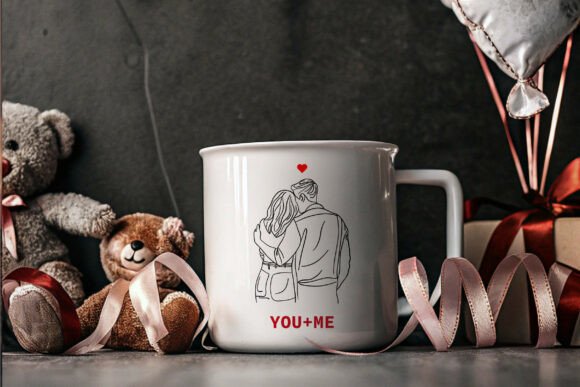
The Line Art Love Couple – Valentine Clipart stands apart not because it’s ornate, but because it’s intentional. Its clean, uncluttered linework avoids visual noise while preserving warmth and narrative intimacy—a couple leaning gently into one another, hands clasped or arms wrapped, rendered with confident, expressive strokes. This isn’t algorithmically generated or trend-chasing vector art. It’s human-made: each curve and pause calibrated by an artist’s hand, translating emotional nuance into scalable form.
That intentionality resonates deeply with current design trends. Across branding, editorial, and social platforms, audiences respond more strongly to visuals that feel *authentic*, not just polished. Studies in visual cognition show that minimalist line art activates the viewer’s imagination—inviting personal interpretation rather than dictating emotion. In a market saturated with hyper-realistic stock imagery and AI-generated romance tropes, this hand-drawn quality offers differentiation grounded in craft, not novelty.
Bridging Creative Flexibility and Commercial Practicality
What makes the Line Art Love Couple – Valentine Clipart especially valuable is how seamlessly it bridges creative expression and commercial utility. The package includes AI, EPS, PNG, JPG, SVG, and PDF files—ensuring compatibility across design ecosystems: Adobe Creative Cloud for print-ready layouts, Figma for collaborative web and app prototyping, Canva for rapid social campaigns, and even embroidery or laser-cutting workflows via scalable vector formats.
This breadth matters. Freelancers juggling five client projects weekly need assets that drop in without conversion headaches. Small-business owners launching limited-edition Valentine’s merchandise require crisp vectors for apparel prints *and* transparent PNGs for Instagram Story overlays—all from the same source. Marketing teams coordinating cross-channel campaigns (email, web banners, physical mailers) benefit from unified visual language that scales effortlessly from thumbnail to poster size. The Line Art Love Couple – Valentine Clipart delivers that continuity—not as a compromise, but as a built-in feature.
Real-World Applications That Reflect Evolving Workflows
Consider these practical examples, drawn from real creator and brand use cases:
- Greeting card studios integrate the illustration into layered templates—using the SVG to dynamically recolor outlines for different palettes (e.g., terracotta and cream for rustic weddings, deep indigo and gold for luxury gifting), then exporting final print files directly from Illustrator.
- E-commerce brands embed the PNG version into Shopify product pages for Valentine’s bundles—pairing the line art with subtle animated hover effects to increase dwell time and perceived craftsmanship.
- Content creators repurpose the EPS file as a base layer in Procreate, adding custom brush textures or watercolor washes to generate unique social posts—maintaining brand consistency while signaling handmade authenticity.
- Nonprofit campaigns adapt the couple motif into inclusive variations (same-gender pairings, diverse skin tones via color fills) using the editable vector paths—demonstrating responsiveness without compromising original artistic integrity.
Each scenario underscores a larger shift: designers no longer seek “just clipart.” They seek foundational assets—modular, ethically sourced, technically robust—that accelerate iteration while reinforcing voice and values.
Aligning With Consumer Expectations and Cultural Shifts
Today’s consumers—especially Gen Z and younger millennials—are attuned to visual storytelling that feels considered, not commodified. They recognize when imagery is mass-produced versus mindfully made. That awareness extends beyond aesthetics into ethics: support for independent artists, transparency in licensing, and sustainability in digital production (e.g., lightweight SVGs reducing page load times and energy use).
The Line Art Love Couple – Valentine Clipart meets those expectations head-on. Its hand-drawn origin signals authorship and care. Its royalty-free, multi-use license supports ethical commercial deployment—no hidden restrictions on merchandise or SaaS integrations. And its format diversity reduces redundant file generation, aligning with growing industry emphasis on efficient, low-overhead digital workflows.
Moreover, its minimalism supports inclusivity by design. Without explicit cultural signifiers, skin tones, or fashion details, the illustration invites reinterpretation—making it adaptable across global markets and diverse audience segments. A marketer in Tokyo can apply cherry-blossom gradients; a wedding planner in Lisbon can overlay it onto hand-lettered Portuguese typography—both retaining emotional resonance without visual appropriation.
Technology as an Enabler, Not the Centerpiece
While AI image generators flood the market with instant “romantic couple” outputs, their limitations are becoming clear: inconsistent line weight, anatomical ambiguity, contextual sterility, and licensing uncertainty. The Line Art Love Couple – Valentine Clipart doesn’t compete with AI—it complements it. Designers use it as a trusted anchor: importing the SVG into AI-assisted tools for color exploration or layout variation, then refining output manually. It functions as a human-curated seed, not a replacement for judgment.
This reflects a maturing relationship with creative technology: professionals aren’t asking “Can AI do this?” but “How does this asset empower *my* process?” The answer, increasingly, lies in hybrid workflows—where high-fidelity, rights-cleared, stylistically coherent assets like this clipart serve as reliable inputs, freeing mental bandwidth for strategy, storytelling, and client collaboration.
Looking Ahead: Beyond Valentine’s Day
Though designed with Valentine’s Day in mind, the Line Art Love Couple – Valentine Clipart demonstrates how seasonally themed assets can achieve lasting relevance. Its simplicity allows recontextualization: used in anniversary campaigns, relationship wellness content, marriage equality advocacy, or even abstract brand metaphors for partnership and trust. Savvy creators treat it not as a disposable holiday prop, but as a foundational element in a long-term visual library—one that grows in value with each thoughtful application.
As design tools become more powerful—and attention spans shorter—the demand won’t be for more assets, but for better ones: those that balance artistry and utility, uniqueness and scalability, heart and efficiency. The Line Art Love Couple – Valentine Clipart exemplifies that standard. It doesn’t shout. It connects. And in doing so, it answers a quiet but urgent need across creative industries: to express love, commitment, and connection with clarity, respect, and enduring style.
Whether you’re building a boutique stationery brand, launching a heartfelt social campaign, or crafting a personalized gift for someone who values meaning over mass production—this illustration isn’t just ready to use. It’s ready to resonate.