Cute Strawberry Goose PNG
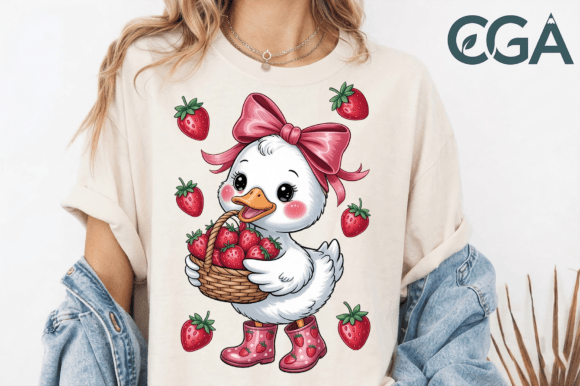
Meet the Cute Strawberry Goose PNG — a hand-illustrated, cottagecore-inspired character that lands somewhere between storybook charm and modern design practicality. This isn’t just another clipart goose. It’s a carefully composed digital asset: a soft-white goose with gentle eyes, wearing a voluminous pink coquette bow and strawberry-patterned rain boots. In its webbed feet, it holds a rustic woven basket brimming with plump, glossy strawberries — while smaller berries drift around it like edible confetti. The palette leans into warm pinks, juicy reds, and creamy whites, all rendered with crisp edges and transparent background support. There’s intention in every detail — from the subtle texture of the basket weave to the gentle curve of the goose’s neck — making it feel both playful and polished.
A Design That Fits Without Fitting In
The Cute Strawberry Goose PNG thrives where personality meets production readiness. Its clean transparency and high-resolution raster format (300 DPI, 4000×4000 px) mean it drops seamlessly into DTG-printed onesies, sublimation-ready tote bags, or die-cut vinyl stickers for water bottles. Unlike vector-based illustrations that sometimes lose warmth when scaled down, this PNG retains its tactile softness even at small sizes — critical for infant apparel tags or laptop sticker thumbnails. You’ll notice how the strawberry motifs aren’t just decorative; they reinforce theme cohesion across product lines. A nursery name sign featuring the goose beside a child’s name reads as intentional, not cobbled together. Same goes for a matching set of lunch boxes and party favor tags — the visual thread is consistent without requiring complex layout work.
Where Whimsy Meets Workflow
This illustration shines brightest when used *as part of a system*, not as a standalone decoration. Think beyond “cute image on shirt.” For children’s apparel brands, the goose becomes a mascot — appearing on hangtags, website banners, and Instagram Stories with slight variations (e.g., holding different seasonal fruit in alternate versions). For boutique stationery makers, it anchors a strawberry-themed party collection: cupcake toppers, printable invitations, and thank-you cards all share the same expressive tone. Even in nursery decor, its scale flexibility matters — enlarged for framed wall art, reduced for pillow embroidery patterns, or simplified into a monochrome line version for subtle bedding prints. The key is recognizing that its strength lies in *recognition*, not repetition. One well-placed goose builds familiarity faster than ten generic berry icons.
Practical Integration, Not Just Aesthetic Appeal
Before adding the Cute Strawberry Goose PNG to your next project, ask two questions: Does it serve the audience’s emotional need? And does it survive real-world production constraints? For toddler pajamas, yes — the rounded shapes and friendly expression align with developmental preferences for soft, non-threatening imagery. For clear water bottle decals, yes — the contrast between pink bow and white feathers ensures legibility against glass or acrylic surfaces. But avoid forcing it into contexts where clarity or neutrality is required: legal disclaimers, minimalist tech branding, or high-contrast accessibility signage. Also, test print samples early. While the file is optimized for color fidelity, screen-to-print variance means a strawberry’s red may shift slightly depending on fabric type or ink saturation — especially on heather grey tees. Order physical proofs before bulk runs.
Pairing With Purpose
Like any strong visual element, the Cute Strawberry Goose PNG benefits from thoughtful companionship. Pair it with typefaces that echo its warmth without competing: a gentle rounded sans serif (like Quicksand or Nunito) for product labels, a delicate serif (such as Playfair Display Light) for nursery wall art titles, or even a subtle handwritten font (e.g., Caveat) for handwritten-style gift tags. Avoid overly geometric or aggressive fonts — they clash tonally. In digital layouts, give the goose breathing room. Don’t crowd it with text blocks or competing graphics. Let its expressiveness carry weight. On social media, use it consistently in profile highlights or story templates — not just as filler, but as a recurring visual cue that signals “this is our sweet, grounded, joyful corner of the internet.”
Licensing That Supports Real Creative Work
The Cute Strawberry Goose PNG comes with an extended commercial license — meaning you can use it across physical products (apparel, mugs, stickers), digital goods (printables, Canva templates), and even client projects — no per-unit fees or attribution requirements. What sets this apart from many marketplace assets is how the license reflects actual creative practice: it permits resale of finished goods, integration into SaaS platforms (with proper usage boundaries), and inclusion in subscription-based design kits — as long as the original file isn’t redistributed as standalone clipart. Always verify license terms directly with Cookgraphicart, especially if you’re building a white-label product line or licensing through third-party platforms like Etsy Print or Printful. When in doubt, reach out — reputable designers clarify usage upfront because they know how much depends on it.
Why It Stays Relevant Beyond Seasonal Trends
Cottagecore aesthetics often risk feeling fleeting — tied too tightly to spring florals or summer picnics. But the Cute Strawberry Goose PNG avoids trend dependency by grounding its whimsy in timeless visual language: round forms, gentle contrast, narrative suggestion (that basket implies abundance, care, harvest), and restrained color harmony. It doesn’t shout. It invites. That makes it adaptable — layer it over linen-textured backgrounds for earthy sophistication, or place it against candy-colored gradients for bold kid-friendly energy. Its longevity isn’t about being “evergreen” in a bland way — it’s about being *resonant*. When customers see it on a mug at a local café or stitched onto a handmade backpack, they don’t think “oh, that’s cute.” They think, “I know that goose. I trust that brand.” And that kind of quiet recognition? That’s what builds real creative equity.