Best Simplest Daily Planner Freebie 51
If you’ve ever stared at a blank page wondering how to start your day—not with overwhelm, but with calm clarity—then Best Simplest Daily Planner Freebie 51 is built for exactly that moment. It’s not another flashy, feature-bloated planner. It’s a quiet, intentional tool: clean lines, uncluttered layouts, and three distinct visual designs—all woven into one thoughtful 90-page PDF. No subscriptions. No logins. Just instant access, immediate printing, and real-world usability from day one.
A Planner That Respects Your Time—and Your Aesthetic
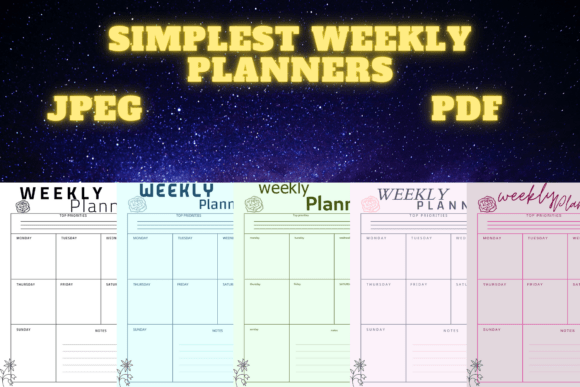
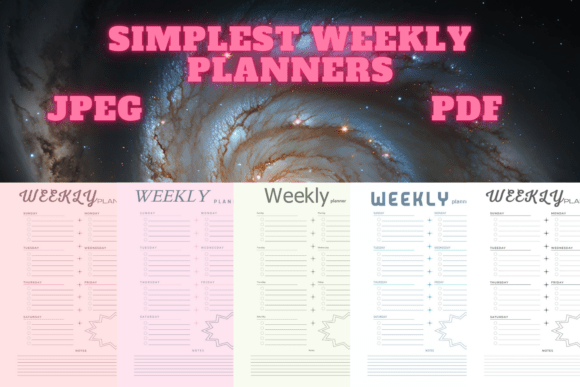
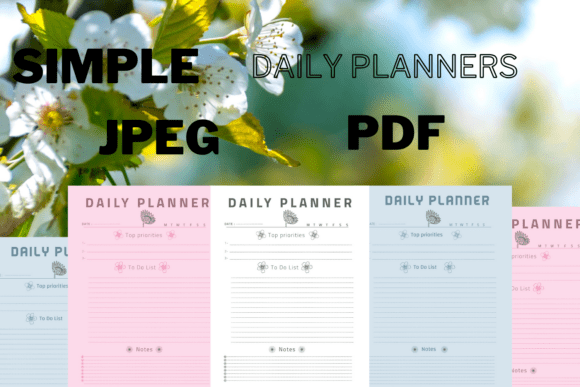
This isn’t decorative stationery. It’s functional design with personality. Each of the three included templates carries its own subtle tone: one leans minimalist and grounded (think soft gray tones, generous white space, gentle margins), another adds quiet rhythm through light line work and balanced grid alignment, and the third introduces restrained warmth—slightly rounded corners, open letterforms, and breathing room around every task block. None feel “corporate.” None feel “cutesy.” They all feel human-scaled and quietly confident.
The typography reflects that intentionality. Clean sans serif headings pair with highly legible, medium-weight body text—designed for quick scanning and long-term use. There’s no decorative script or distracting flourishes. Instead, there’s consistency in spacing, hierarchy in sizing, and visual rhythm in the daily layout blocks. You’ll notice it most when you’re jotting down a morning intention, blocking time for deep work, or reviewing what truly moved the needle by 4 p.m.
Where This Planner Fits—Without Fitting In
Best Simplest Daily Planner Freebie 51 works where many planners fail: across contexts. Designers use it as a tactile counterpart to digital tools—sketching client notes beside time blocks, aligning deadlines with creative sprints. Entrepreneurs print weekly spreads to pin above their desk, annotating next steps directly on paper while keeping digital calendars reserved for meetings only. Bloggers and content creators rely on the “focus-first” layout to separate idea generation from execution—no more scrolling past 17 tabs to remember what they meant to draft.
It also bridges personal and professional needs seamlessly. A small business owner might use one template for client-facing planning (clean, structured, deadline-forward), and switch to another for personal reflection (softer, more spacious, journal-friendly). Crafters and hobbyists appreciate the unruled side margins—perfect for doodling ideas or tracking material inventory without breaking flow. Even educators and remote team leads adapt pages for daily standups or student check-ins—because simplicity scales.
Why Simplicity Isn’t Just a Style Choice—It’s a Strategy
In a world saturated with notifications, dashboards, and auto-syncing apps, choosing a simple daily planner is an act of design discipline. Best Simplest Daily Planner Freebie 51 removes decision fatigue before it starts. No color-coding systems to learn. No habit trackers demanding daily input. Just space—intentionally shaped—for what matters *today*. That restraint supports better visual hierarchy: your top priority stands out because nothing else competes for attention.
That clarity builds trust—not just in the tool, but in yourself. When your planner doesn’t require maintenance, you’re more likely to return to it. When the layout feels familiar after three days—not three weeks—you build consistency without force. And consistency, over time, reshapes how you perceive your capacity, your focus, and your progress.
Practical Tips Before You Print (or Share)
You’ll receive a ZIP file containing one ready-to-print PDF (90 pages) and three high-resolution JPEGs (300 DPI)—ideal if you want to import a single spread into Canva, Notion, or Adobe Express. Before printing, consider these real-world checks:
- Test one page first. Print a Monday spread on standard 8.5" x 11" paper—check margin clearance, especially if using a home printer with tight edge limits.
- Choose your anchor template. Flip through all three designs—not for “prettiest,” but for which one makes your hand move faster when writing. That’s your fit.
- Pair intentionally—if you customize. If adding logos, quotes, or branding elements later, stick to typefaces with similar x-heights and proportions. A warm, friendly sans serif (like Poppins or Inter) complements the planner’s tone better than a stark geometric or high-contrast serif.
- Respect the license. This is a commercial-use planner: you may use it for client projects, team resources, or printed products—but don’t redistribute the files or resell the templates as your own. Your review helps us keep improving; it also tells others whether this fits their workflow.
Not Just a Tool—A Quiet Shift in How You Show Up
We don’t sell productivity. We offer structure that disappears when you need it to—so you see your goals, not the grid. Best Simplest Daily Planner Freebie 51 doesn’t ask you to become more disciplined. It asks you to become more present—to the task, the hour, the choice in front of you. That’s why so many designers, marketers, and small business owners return to it month after month: not because it’s perfect, but because it’s honest. It mirrors how real work unfolds—unevenly, iteratively, and always within human limits.
Your review isn’t just feedback—it’s part of the design process. Did a certain layout help you finally stop over-scheduling? Did the blank side margins become your go-to for brainstorming? Did one template click instantly while another took two weeks? That’s the kind of detail that shapes what comes next—not algorithms or trends, but real use, real friction, real relief.
If you're ready to replace frantic reactivity with grounded intention—and you value clean design that serves function without shouting for attention—Best Simplest Daily Planner Freebie 51 isn’t the flashiest option. But it might be the one that stays open on your desk, dog-eared and annotated, long after the novelty wears off.